English| EUR
Suggested for you
More currencies
Choose a language
Destin Harbor sits in one of the Gulf Coast's most active bottlenose dolphin habitats, yet federal law draws a bright line between observation and contact. The Marine Mammal Protection Act makes it illegal to swim with, feed, or pursue wild dolphins anywhere in U.S. waters. This page explains the statute, the penalties, and the sanctioned alternatives available along the Emerald Coast.
Quick answer
No, you cannot legally swim with wild dolphins in Destin, Florida. The Marine Mammal Protection Act prohibits any pursuit, harassment, or attempt to swim with marine mammals in their natural habitat, carrying fines up to $100,000 and potential criminal charges. Destin Harbor offers no legal dolphin swim programs; all authorized experiences keep participants aboard vessels at federally mandated distances from the animals.
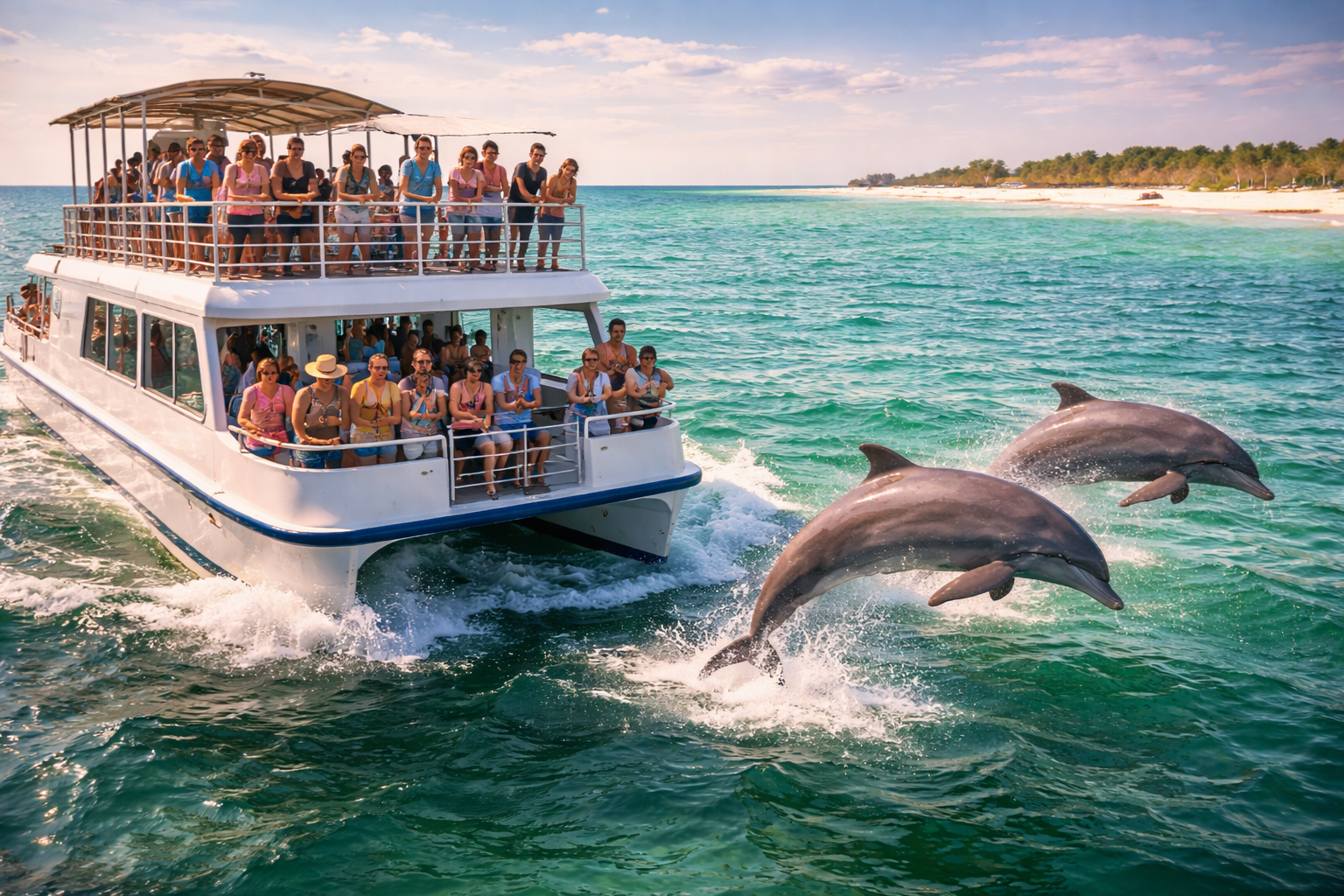
The bottlenose dolphins that traverse the passes and nearshore waters around Destin Harbor are protected under the Marine Mammal Protection Act of 1972, a federal statute that prohibits harassment, feeding, or any attempt to swim with wild marine mammals. The law defines harassment as any act of pursuit or annoyance that has the potential to disturb a marine mammal in its natural behavior, and swimming toward a dolphin—even with benign intent—meets that threshold. NOAA Enforcement records show that violations result in civil penalties starting at $11,000 per incident, with repeat offenses or cases involving injury escalating to criminal prosecution and fines exceeding $100,000. The question of whether you can swim with dolphins in Destin Florida arises frequently because the Emerald Coast is home to year-round resident pods and seasonal visitors that hunt mullet and menhaden in the shallow bays and along the jetties. Visibility from charter boats and paddleboards makes close encounters feel accessible, but federal observers patrol these waters and enforce buffer zones. Captains who allow passengers to enter the water near dolphins risk losing their commercial permits; individual swimmers face Coast Guard interdiction and referral to NOAA's Office of Law Enforcement. No facility in Destin operates a captive dolphin swim program. The nearest sanctioned swim-with-dolphin attractions are found in controlled environments outside the Florida Panhandle, typically involving animals born under human care in USDA-licensed facilities. These programs bear no resemblance to wild encounters and remain controversial within marine science communities. Within Destin's jurisdiction, every legal dolphin experience is observation-based: certified eco-tour operators keep vessels at least 50 yards from pods, narrate behavior patterns, and cut engines when animals approach voluntarily. Understanding the prohibition helps frame realistic expectations. Wild dolphins in Destin Harbor exhibit predictable feeding behavior at dawn and dusk, surface frequently in calm conditions, and often ride bow waves created by passing boats. These interactions occur on the animals' terms and within the parameters of federal wildlife law. Observers equipped with polarized lenses and telephoto capability report clear surfacing sequences, mother-calf pairs, and cooperative hunting formations without ever entering the water. The Marine Mammal Protection Act exists to prevent stress-induced disruption of feeding, breeding, and nursing—activities essential to pod survival and already pressured by vessel traffic and coastal development. Visitors planning dolphin experiences in Destin should verify that operators hold valid Gulf Coast permits and post NOAA viewing guidelines on board. Reputable charters brief passengers on lawful behavior before departure, maintain required distances, and report illegal activity by other vessels. The federal statute applies uniformly across state and federal waters, meaning the prohibition on swimming with wild dolphins in Destin Florida holds regardless of proximity to shore or the animal's apparent friendliness.
“The Marine Mammal Protection Act defines harassment as any act of pursuit or annoyance that has the potential to disturb a marine mammal in its natural behavior.”
Interactions with wild dolphins in Destin Harbor are strictly regulated to ensure the safety of the animals and the public. Understanding federal laws is essential for responsible wildlife observation.
The Marine Mammal Protection Act makes it illegal to harass, hunt, capture, or kill any marine mammal in U.S. waters. This federal law prohibits swimming with, touching, or feeding wild dolphins.
Wild dolphins in Destin Harbor are protected under federal law, meaning they must be allowed to behave naturally without human interference. Enforcement agencies monitor the harbor to ensure these protections are upheld.
Harassment includes any human activity that has the potential to disturb a marine mammal in the wild. This includes pursuing, chasing, or attempting to interact with dolphins during boat excursions.
Feeding wild dolphins is considered harassment and is illegal because it alters the animals' natural foraging behaviors. It can also cause dolphins to lose their fear of boats, leading to dangerous interactions.
Visitors are encouraged to observe dolphins from a distance using binoculars or camera lenses. Maintaining a respectful distance keeps both the animals and observers safe while allowing for natural behavior viewing.
Only individuals with specific federal permits for scientific research or public display are legally allowed to interact closely with marine mammals. General public access for swimming with wild dolphins does not exist.
There are no admission fees for swimming with dolphins in Destin Harbor because this activity is not available. No legal tour operators charge for or offer this service.
Verdict: The cost to swim with wild dolphins is 0 USD because the activity is prohibited by federal law.
Federal law prohibits swimming with or touching wild dolphins. When observing from a boat, maintaining proper distance protects both dolphins and ensures legal compliance.
Because swimming with wild dolphins is prohibited by federal law, there are no authorized hours of operation for this activity in Destin Harbor.
Destin Harbor is located in Destin, Florida, and serves as the primary hub for dolphin observation cruises. Visitors typically arrive by car via U.S. Highway 98, which provides direct access to the various harbor-side marinas.
U.S. Highway 98 to the harbor area
Emerald Coast Rider (ECR) to the Harbor Blvd stop
Direct service to Destin Harbor docks
Parking at Destin Harbor is available in several public lots near the boardwalk. Plan to arrive during the designated window of 00:00–00:00, noting that observation tours depart from these docks.
Everything you need to know about can you swim with dolphins in destin florida
No, you cannot swim with dolphins in destin florida as it is prohibited by federal law. The Marine Mammal Protection Act protects these animals from harassment, which includes swimming or interacting with them in their natural habitat.
There are no legal facilities that offer an encounter where you can swim with dolphins in destin florida. Visitors interested in these marine mammals should opt for reputable boat tours that observe the animals from a respectful distance.
Swimming with wild dolphins is illegal because it disrupts their natural behaviors, such as feeding, resting, and nursing. Human interaction can cause stress to the animals and may lead to dangerous encounters for both the people and the dolphins.
You can enjoy the coastal ecosystem through authorized dolphin cruises that prioritize conservation and ethical observation. These boat trips provide opportunities to see bottlenose dolphins and other local marine wildlife without interfering with their safety.
Even with a private guide, you cannot swim with dolphins in destin florida because the federal prohibition applies to everyone regardless of the vessel or service provider. All operators must adhere to these regulations to maintain their permits and ensure the protection of the marine environment.
It is not legal to interact with dolphins in the wild anywhere in United States waters. Authorities strictly enforce these regulations to ensure that humans do not alter the natural activities of the marine population.
Attempting to swim with these protected mammals can result in significant fines and legal penalties under federal law. It is important to respect the guidelines set by agencies like NOAA to ensure the long-term health of the local dolphin population.
You can find information regarding ethical marine life observation on the official websites of local wildlife agencies or by speaking with authorized tour operators in Destin Harbor. These resources explain the importance of maintaining a safe distance during your time on the water.
Destin Dolphin Cruise Reviews
Read more GuideDolphin Cruise Prices & Deals
Read more Tickets & toursGlass-Bottom Boat Dolphin Cruises
Read more GuideParking and Arrival Information
Read more GuideDiscount Promo Codes
Read more Tickets & toursDolphin & Snorkeling Tours
Read more Tickets & toursSunset Dolphin Cruises
Read more Tickets & toursPrivate Dolphin Tours
Read more